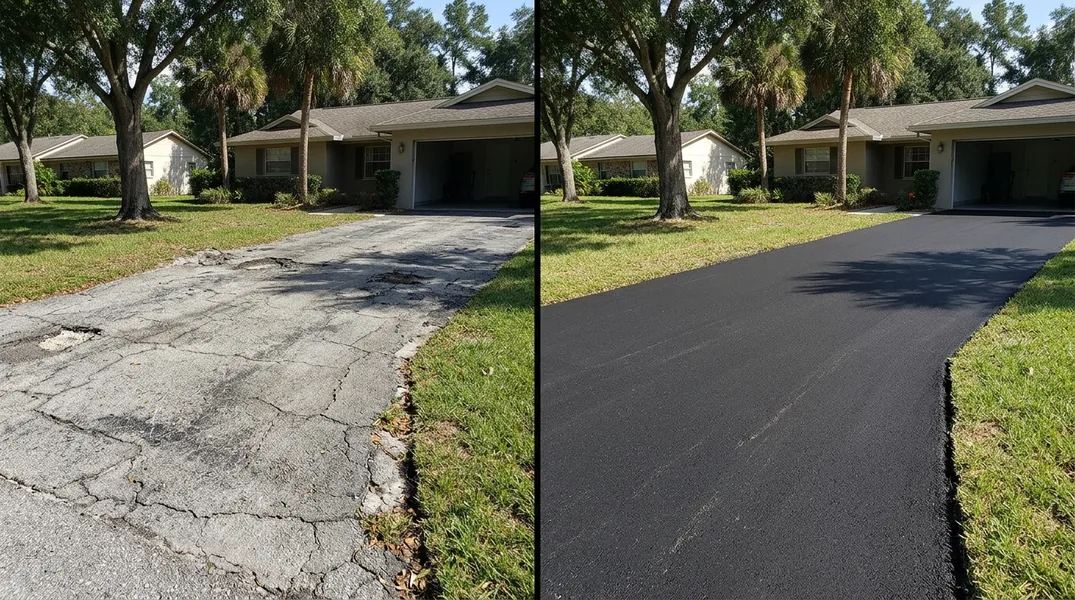
Understanding Asphalt Driveway Damage: When Cracks Mean Trouble
Your driveway is one of the hardest working surfaces on your property. Every day, it endures the weight of vehicles, the stress of temperature swings, and the relentless Florida sun. Over time, even the best-installed asphalt will show signs of wear. The key question for homeowners in Orlando isn't whether cracks will appear, but whether they signal a simple repair job or a need for more extensive work.
Cracks in asphalt fall into different categories, and each tells a different story about the condition of your driveway. Hairline cracks, which are thin and relatively shallow, often develop as the asphalt naturally cures and settles. Alligator cracks, which resemble the pattern of an alligator's skin, indicate deeper structural problems. Linear cracks that run in straight lines suggest stress from traffic or underlying base issues. By learning to read these visual clues, you can make an informed decision about whether your driveway needs Driveway Repair or if a full replacement makes more sense.
How Long for Asphalt to Cure: What New Driveway Owners Need to Know
One of the most common questions homeowners ask after investing in Asphalt Driveway Paving & Installation is: how long for asphalt to cure? The answer isn't as simple as a single number, because curing happens in stages. Immediately after installation, your new asphalt will begin to harden, but this initial set is just the beginning of the curing process.
In the first 24 to 48 hours, your asphalt will firm up enough to walk on, though it will still be somewhat soft. The surface will continue to harden over the next several weeks as the oils in the asphalt evaporate and the material bonds fully. In the warm, humid climate of central Florida, this process can vary. Typically, you should expect your new asphalt to reach 85 to 90 percent of its final strength within about one week, with full curing taking place over the course of 30 to 60 days. During this curing period, the pavement is still vulnerable to damage from heavy traffic, so patience during those first weeks is essential for the longevity of your investment.
How Long Before You Can Drive on New Asphalt: A Timeline for Orlando Homeowners
The question of how long before you can drive on new asphalt is one that homeowners are eager to answer, especially when they've just completed a driveway installation. While your new pavement may look ready for traffic shortly after installation, driving on it too soon can cause permanent damage. Understanding the proper timeline protects your investment and ensures your driveway performs well for years to come.
Most professional contractors, including those serving Kissimmee and surrounding areas, recommend waiting at least 48 hours before driving on newly installed asphalt with light vehicles. However, this timeline assumes ideal conditions. In Florida's heat and humidity, asphalt can cure slightly faster, but it's still wise to be cautious. Heavy vehicles, such as trucks or SUVs, should wait at least 5 to 7 days before regularly using the driveway. During the first 30 days, avoid parking in the same spot for extended periods, as the weight concentration can create soft spots or depressions. This patience in the early weeks sets the stage for a durable driveway that will serve your home reliably.
New Asphalt Driveway Care: Protecting Your Investment from Day One
Once your new driveway has cured sufficiently, the focus shifts to proper maintenance. New asphalt driveway care begins immediately and continues throughout the life of the pavement. Many homeowners don't realize that the first few months are critical in establishing a maintenance routine that will pay dividends for years. Protecting your asphalt from the start means understanding what threats it faces and how to counter them.
The primary enemies of new asphalt are UV rays, water penetration, and chemical spills. The intense Florida sun can oxidize the surface of your asphalt, causing it to fade and become brittle over time. Water that seeps into small cracks can freeze and thaw (though this is less common in central Florida), expanding and widening those cracks. Gasoline, oil, and other vehicle fluids can soften the asphalt binder, leading to deterioration. To protect your new driveway, clean up any spills promptly, avoid using harsh chemicals on the surface, and plan for regular seal coating. Most experts recommend waiting 90 days after installation before applying the first seal coat, allowing the asphalt to fully cure and off-gas before sealing. After that initial seal coat, establishing a regular maintenance schedule becomes your best defense against premature aging and the need for costly repairs.
How Often to Seal Driveway: A Maintenance Schedule for Long-Term Protection
Understanding how often to seal driveway is fundamental to extending the life of your asphalt. Seal coating acts as a protective barrier, shielding the asphalt from UV damage, water infiltration, and chemical spills. Without regular seal coating, your driveway will age much faster, and minor issues will quickly escalate into major problems requiring expensive repairs or full replacement.
Most asphalt professionals recommend seal coating your driveway every 2 to 3 years, depending on traffic volume and local climate conditions. In Orlando, where the sun is intense and rain is frequent, staying on the more aggressive end of this schedule (every 2 years) is often wise. If your driveway experiences heavy traffic or is exposed to significant wear, you may want to seal coat every 18 months. Conversely, if your driveway is lightly used and well-maintained, you might extend the interval to 3 years. The cost of regular seal coating is minimal compared to the expense of Pothole Repair & Asphalt Patching or Asphalt Resurfacing & Overlay. By committing to a consistent seal coating schedule, you can often double or triple the lifespan of your asphalt driveway, making it one of the smartest investments a homeowner can make.
Repair vs. Replace: Making the Right Decision for Your Orlando Driveway
When your driveway shows significant damage, the decision between repair and replacement can feel overwhelming. The right choice depends on several factors, including the extent of the damage, the age of the pavement, and your long-term plans for the property. A driveway that's only a few years old with isolated cracks or potholes is usually an excellent candidate for targeted repairs. However, a driveway that's 15 to 20 years old with widespread cracking, multiple pothole repairs, and significant surface deterioration is often better served by replacement.
One useful rule of thumb is the 50 percent rule: if repairs will cost more than 50 percent of the price of a new driveway, replacement is usually the better investment. This is because a newly installed driveway comes with the benefit of a fresh start and years of reliable service ahead, whereas an older driveway that's been repeatedly repaired may continue to deteriorate. When you're weighing your options, getting a professional assessment is invaluable. Orlando Asphalt Paving can evaluate your specific situation and provide honest guidance on whether repair or replacement makes the most sense for your budget and your home's needs. Contact us at (321) 352-4836 or request a free estimate to discuss your driveway's condition and explore your options. Our team has helped countless homeowners make this important decision, and we're here to help you too.
Looking for a professional asphalt paving contractor in Orlando? Orlando Asphalt Paving responds fast for all your asphalt paving needs.
Get a Free Quote