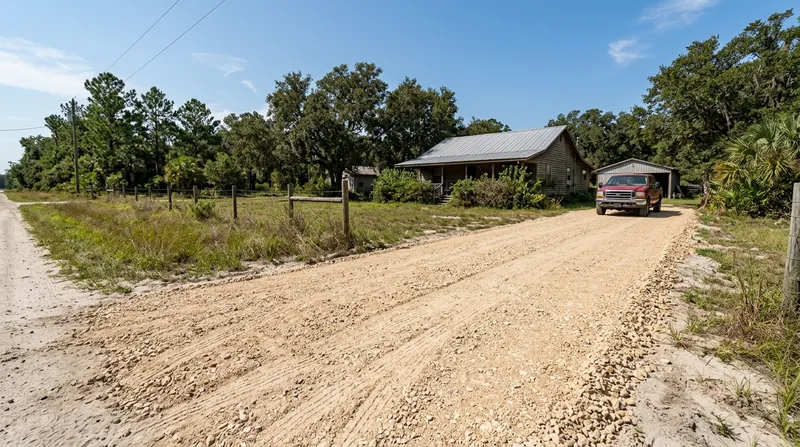




Central Florida's residential driveways sit on deep ridge sand that shifts and compacts unevenly under the weight of vehicles and the force of daily summer thunderstorms. A gravel driveway installation and grading in Orlando requires understanding how loose sand behaves on our local terrain, where proper crown and drainage are not luxuries but necessities. Our work keeps your drive passable through the rainy season, prevents washouts at the edges, and extends the life of the stone base by regrading and adding fresh material where sand has migrated. We have served Greater Orlando since 2014, and we know the difference between a drive that holds and one that turns into a washboard of ruts and bare spots. If your driveway has settled, rutted, or washes away after heavy rain, gravel regrading and proper grading are the most cost-effective fix short of a full paving upgrade.
Why Gravel Driveway Regrading Matters in Orlando's Sand and Rain
Orlando's landscape sits on porous limestone and deep, well-drained ridge sand. That sand is stable when confined and compacted, but it moves fast when vehicles compress it unevenly or when rain washes fines through the base. A gravel drive that was crowned and level three years ago will have settled in the middle, developed ruts along the wheel paths, and shed stone toward the shoulders where drainage is poor. Summer thunderstorms with heavy runoff accelerate the problem, and the sandy shoulders of an unconfined drive offer nothing to hold the stone in place. Regrading redistributes the existing stone, restores the crown so water sheds rather than pools, and adds fresh gravel where sand has washed through the base. The result is a drive that stays passable, sheds water quickly, and does not require replacement for several more years.
- We measure the drive and identify low spots where water collects or ruts have formed.
- We regrade the existing stone to restore crown and proper slope for drainage.
- We add fresh gravel of the correct size and depth where the base has eroded or compacted.
- We proof-roll or compact the finished surface so stone does not shift on the first heavy rain.
- We verify that shoulders are stable and that water runs off toward the street or a drainage swale.
A well-graded gravel drive in Orlando will shed water fast enough to prevent standing pools and slow enough that the stone stays in place under tire loads. Check the driveway repair page for guidance on when regrading is the right move and when the base is too far gone for a patch to hold.
Local example: A Winter Park homeowner with a half-mile entry drive and a 1950s ranch house had ruts deep enough to bottom out a sedan after four years of use. The drive was still sound underneath, but the stone had settled and compacted. We regraded the entire length, added fresh limestone screenings to the worn spots, and restored the crown. The cost was under $1,500, and the drive stayed passable for another five years before an asphalt overlay made sense.
How We Grade and Prepare Your Gravel Drive: Step-by-Step Process in Orlando
Gravel driveway regrading is straightforward work, but it depends on careful measurement and understanding of your local drainage. We start with a site visit to measure the drive, check the crown, and identify where water collects or stone has washed away. We assess whether the base is still sound or whether the sand underneath has eroded so much that regrading alone will not hold. We discuss your budget and whether a gravel upgrade, recycled asphalt millings, or an asphalt surface makes more sense for the long term.
- We visit the site, measure the driveway length and width, and check the existing crown and drainage.
- We identify ruts, low spots, and areas where the stone has migrated or the base has eroded.
- We calculate the tonnage of fresh gravel needed and the labor for regrading and compaction.
- We regrade the drive with a motor grader or dozer, moving high spots to low spots and restoring slope.
- We add fresh stone of the correct size (typically 3/4-inch crushed limestone or recycled asphalt) to the worn areas.
- We proof-roll or compact the surface and verify that water sheds toward the street or a drainage swale.
The entire process typically takes one day for a standard residential drive. We leave your driveway with a proper crown, no standing water, and fresh stone that will hold through the next rainy season. For drives longer than a quarter-mile or those with significant drainage issues, we may recommend recycled asphalt millings instead of virgin gravel, which compact better and resist migration. See our recycled asphalt page for more on that option.
Real case: An Apopka property manager overseeing a private road serving six homes had standing water near the entrance after every thunderstorm. The drive was gravel, and the crown had flattened. We regraded the entire 600 feet, moved the high spots to create a 2 percent slope, and added recycled asphalt millings to the low areas. Water now runs off within minutes of the rain stopping, and the road is passable year-round without washouts.
Gravel Driveway Methods and Materials
| Approach | Description | Best For |
|---|---|---|
| Regrading with existing stone | We redistribute the gravel on site, restore crown, and compact without adding material. | Drives that have settled but still have adequate stone depth and no base erosion. |
| Regrading with fresh virgin gravel | We regrade and add new 3/4-inch crushed limestone to areas where stone has migrated or compacted away. | Drives with moderate wear, good drainage, and a solid sand base underneath. |
| Regrading with recycled asphalt millings | We regrade and add recycled asphalt (RAP), which compacts tighter than gravel and resists migration in heavy rain. | Longer drives, high-traffic private roads, and properties where the base needs reinforcement. |
| Full-depth grading and base preparation | We remove failed gravel, grade the sand base, and install a fresh stone base with proper compaction. | Drives where the sand base has eroded, or where an asphalt paving upgrade is planned next. |
Gravel Driveway Installation and Grading Cost in Orlando: What to Expect
Gravel regrading in Orlando typically starts at $950 for a standard residential drive (roughly 50 to 80 feet long and 10 to 12 feet wide) with moderate settling and no base erosion. The cost moves up with driveway length, width, the amount of fresh stone needed, and the complexity of drainage. A 200-foot private road or a drive with significant base failure will cost more, and we price those jobs on site after measurement and inspection. Recycled asphalt millings cost slightly more per ton than virgin gravel but last longer and compact better, making them a smart choice for high-traffic or longer drives.
The main factors that affect the price are the length and width of the drive, the depth of ruts and settling, whether fresh stone is needed or just regrading, the type of material (virgin gravel versus recycled asphalt), and access for equipment. A narrow in-town drive in College Park or Thornton Park may cost less per linear foot than a long entry drive in a gated community near Lake Nona, where the drive is wider and equipment has to travel farther from the street. We always provide a free written estimate that includes measurements, tonnage, and labor, so you know exactly what the job will cost before we start. Call (321) 352-4836 for a no-obligation estimate, or visit our pricing page for typical ranges and what factors move the cost up or down.
Gravel Driveway Installation and Grading Near Me: What Orlando Homeowners Should Know When Hiring
Hiring a contractor for gravel work is straightforward if you know what to look for. Start by getting two or three estimates from local companies with verifiable addresses and local phone numbers in the Orlando area. A contractor with a local address and local plates is a strong signal that they are established and accountable, not a traveling crew that will disappear after the job. Ask each contractor to measure your drive, specify the tonnage of material they plan to use, and provide a written estimate before any work begins. Check references if possible, and ask whether they have done work in your neighborhood or on similar drives.
- Verify that the contractor is fully insured and can provide a current certificate of insurance.
- Ask whether the municipality or your HOA requires a permit for grading or driveway work, and confirm the contractor will help navigate that process.
- Request a written estimate that includes drive dimensions, tonnage of material, labor, and total cost.
- Check that the contractor understands local drainage rules and can explain how they will handle stormwater runoff.
- Confirm that the contractor will call for a Florida 811 utility locate before any excavation or grading begins.
If your drive is in an HOA community, check the architectural standards to confirm that gravel is permitted and that any restrictions apply to material color or depth. Some communities require recycled asphalt or crushed limestone of a specific size, so verify before the work starts. For properties near retention ponds or drainage swales, confirm with your city or county that the grading will not violate stormwater rules. Contact us at (321) 352-4836 for a free estimate, and we will help you understand permitting, HOA requirements, and whether regrading, recycled asphalt, or an asphalt upgrade makes the most sense for your property.
Gravel Driveway Installation & Grading in Orlando: Pricing Guide
| Service | Price | Details |
|---|---|---|
| Standard residential driveway regrading | Starting at $950 | 50 to 80 feet long, 10 to 12 feet wide, moderate settling, existing stone redistributed with compaction |
| Regrading with fresh virgin gravel | Starting at $1,200 | Includes regrading plus fresh 3/4-inch crushed limestone added to worn areas, typical 1 to 2 tons of new material |
| Regrading with recycled asphalt millings | Starting at $1,350 | Regrading plus recycled asphalt (RAP) material, which compacts tighter and resists migration better than virgin gravel |
| Longer drives and private roads | On estimate | 200-foot or longer drives, high-traffic roads, or jobs with significant base erosion require site measurement and tonnage calculation |
| Travel and estimate | Free estimate included | Response within 24 hours across Orlando, Kissimmee, Winter Park, Sanford, and surrounding areas, no obligation to book |
Indicative pricing, the exact cost depends on square footage, finish, and site access. Free personalized estimate within 24h at (321) 352-4836.


